
sammlinux sammlinux
  • Ubuntu
    UbuntuShow More
    How To Install and Use Docker CE on Ubuntu 22.04
    26 Min Read
    How To Install and Secure phpMyAdmin on Ubuntu 22.04
    5 Min Read
    How To Secure SSH with Fail2Ban on Ubuntu 22.04
    8 Min Read
    How To Install Uptime Kuma on Ubuntu 22.04
    17 Min Read
    How To Install Ubuntu Server 22.04 LTS with Screenshots
    14 Min Read
  • Rocky Linux
    Rocky LinuxShow More
    How To Install phpMyAdmin on Rocky Linux 9
    15 Min Read
    How To Secure SSH with Fail2Ban on Rocky Linux 9
    12 Min Read
    How To Install Rocky Linux 9.2 Server with Screenshots
    12 Min Read
    How To Set Up a Firewall Using FirewallD on Rocky Linux 9
    8 Min Read
    How To Install Nginx on Rocky Linux 9: A Comprehensive Guide
    10 Min Read
  • Debian
    DebianShow More
    How To Secure SSH with Fail2Ban on Debian 11
    8 Min Read
    How To Install Debian 11 (Bullseye) Server with Pictures
    12 Min Read
    How To Install and Setup Node.js on Debian 11
    6 Min Read
    How To Install PHP 8.2 on Debian 11
    12 Min Read
    How To Install Nginx on Debian 11: A Comprehensive Guide
    9 Min Read
  • Linux
    LinuxShow More
    Best Practices Linux Server Security for System Administrator
    8 Min Read
    A Simple Guide: How To Manage Groups on Linux
    5 Min Read
    How To Manage Log Files Using Logrotate In Linux
    7 Min Read
    The Easy Ways to Check File Size in Linux
    7 Min Read
    How To Backup Files From Remote Linux VPS Using Rsync Script
    12 Min Read
  • CentOS
    CentOSShow More
    How To Secure SSH with Fail2Ban on CentOS 7
    9 Min Read
    How To Install PHP 8.2 on CentOS 7 / RHEL 7
    18 Min Read
    How To Install Apache Web Server on CentOS 7
    11 Min Read
    How To Set Up a Firewall Using FirewallD on CentOS 7
    5 Min Read
    Initial Setup CentOS 7 Server: Secure and Efficient
    9 Min Read
  • DevOps
    DevOpsShow More
    How To Create AWS CloudFront: A Step-by-Step Guide
    10 Min Read
Reading: How To Set Up a Firewall with UFW on Debian 11
Share
Font ResizerAa
Linux for BeginnersLinux for Beginners
  • Ubuntu
  • Rocky Linux
  • Debian
  • Linux
  • CentOS
  • DevOps
Search
  • Ubuntu
  • Rocky Linux
  • Debian
  • Linux
  • CentOS
  • DevOps
Follow US
Copyright © 2014-2023 Ruby Theme Ltd. All Rights Reserved.

How To Set Up a Firewall with UFW on Debian 11

Samuel Siahaan
By Samuel Siahaan
Last updated: September 9, 2023
SHARE

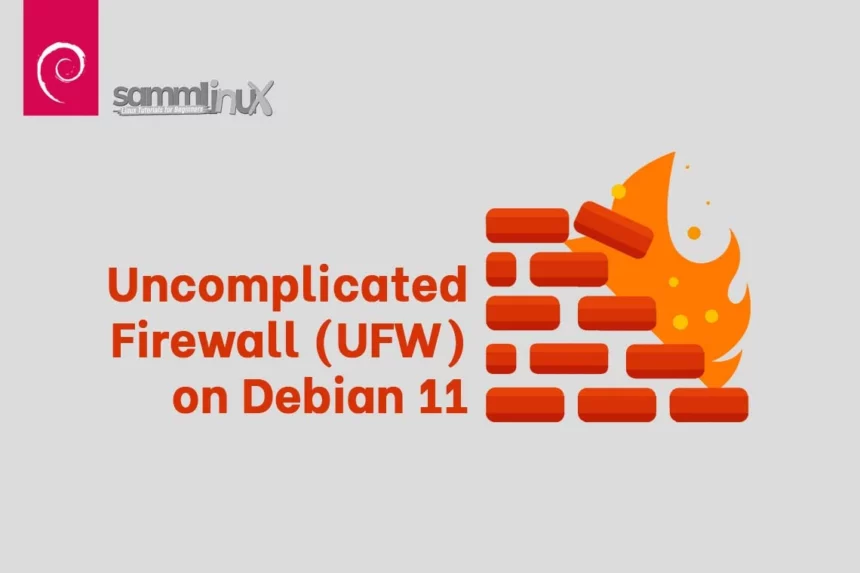
When it comes to securing your Debian 11 server, one of the most critical steps you can take is setting up a firewall. Think of a firewall as a shield that guards your server against the outside world. It gives you the power to decide what network traffic gets through and what gets blocked. In other words, it’s like having a bouncer at the door of your server, deciding who gets in and who doesn’t. In this guide, we’ll walk you through the process of how to set up a firewall using Uncomplicated Firewall (UFW) on Debian 11.

Contents
Table of ContentsWhy Do You Need a Firewall?Set Up a Firewall with UFW on Debian 11Step 1: Install or Set Up UFWStep 2: Checking UFW Status on Debian 11Step 3: Configuring Default PoliciesStep 4: Allowing SSH AccessStep 5: Allowing Additional PortsStep 6: Enabling UFW on Debian 11Step 7: Verifying the RulesStep 8: Additional UFW Commands on Debian 11Conclusion

Table of Contents

  • Why Do You Need a Firewall?
  • Set Up a Firewall with UFW on Debian 11
    • Step 1: Install or Set Up UFW
    • Step 2: Checking UFW Status on Debian 11
    • Step 3: Configuring Default Policies
    • Step 4: Allowing SSH Access
    • Step 5: Allowing Additional Ports
    • Step 6: Enabling UFW on Debian 11
    • Step 7: Verifying the Rules
    • Step 8: Additional UFW Commands on Debian 11
  • Conclusion

Why Do You Need a Firewall?

Before we dive into the practical steps, let’s briefly discuss why having a Firewall on your Debian 11 server is essential. A firewall serves several crucial purposes:

  • Security: A firewall acts as a shield, blocking unauthorized access to your server. It’s like having a security guard at the entrance to your server, checking who’s allowed in.
  • Access Control: With a firewall, you can specify which services and ports are open to the internet and which are not. This helps prevent unauthorized access to sensitive services.
  • Protection Against Malicious Traffic: Firewalls can filter out malicious traffic, such as DDoS attacks, brute-force login attempts, and known vulnerabilities, keeping your server safe from harm.
  • Privacy: Firewalls help protect your server’s privacy by blocking unwanted or unnecessary network requests.

Now that we understand why a firewall is crucial, let’s get started with setting up UFW on Debian 11.

Set Up a Firewall with UFW on Debian 11

Here’s a simple guide on how to set up a firewall with UFW on Debian 11. By following these steps, you can tap into the advantages it offers:

- Advertisement -

Step 1: Install or Set Up UFW

Uncomplicated Firewall (UFW) is a user-friendly interface for managing iptables, the default firewall management tool on Debian. To install UFW, open a terminal and run:

Bash
$ sudo apt update
$ sudo apt install ufw

Step 2: Checking UFW Status on Debian 11

After installation, let’s check the status of UFW on Debian 11. You can do this by running:

Bash
$ sudo ufw status

If UFW is inactive on Debian 11, you’ll see a message saying, “Status: inactive.” This means that all incoming and outgoing traffic is allowed. We’ll change that shortly.

Step 3: Configuring Default Policies

Before enabling the firewall, you should define the default policies for incoming and outgoing traffic. By default, UFW denies all incoming traffic and allows all outgoing traffic, which is a good starting point for most servers.

To set these defaults, use the following commands:

- Advertisement -
Bash
$ sudo ufw default deny incoming
$ sudo ufw default allow outgoing

Step 4: Allowing SSH Access

If you’re connecting to your server via SSH (Secure Shell), you’ll want to allow SSH traffic to ensure you can still access your server. SSH typically uses port 22. To allow SSH traffic, use the following command:

Bash
$ sudo ufw allow ssh

Step 5: Allowing Additional Ports

Depending on your server’s applications and services, you may need to open specific ports. For example, if you’re hosting a web server, you’ll want to allow HTTP (port 80) and HTTPS (port 443) traffic. You can open these ports with commands like:

Bash
$ sudo ufw allow http
$ sudo ufw allow https

Don’t forget to customize these commands to suit your particular requirements. Moreover, carefully think about which ports are essential for your server to work properly, and solely open those.

- Advertisement -

Step 6: Enabling UFW on Debian 11

Once you’ve configured the default policies and allowed the necessary ports, it’s time to enable UFW on Debian 11. This can be done with:

Bash
$ sudo ufw enable

You’ll be prompted to confirm this action. Type ‘y’ and press Enter to proceed.

Step 7: Verifying the Rules

To confirm that UFW is correctly configured, run:

Bash
$ sudo ufw status

You’ll want to check out a list of permitted ports and services. This is a great way to make sure your settings are on point and that UFW is safeguarding your server just as you want it to Additionally,

Step 8: Additional UFW Commands on Debian 11

Now that you’ve set up a basic firewall with UFW, here are some additional commands you might find useful:

  • To deny a specific port: sudo ufw deny [port]
  • To allow a specific IP address: sudo ufw allow from [IP address]
  • To delete a rule: sudo ufw delete [rule]

Conclusion

Congratulations! You’ve successfully set up a firewall using Uncomplicated Firewall (UFW) on your Debian 11 server. Your server is now better protected against unauthorized access and malicious traffic. However, remember that server security is an ongoing process, and it’s essential to keep your server and firewall rules up to date to stay protected. Regularly review your firewall rules and adapt them as your server’s requirements change. By following these steps and staying vigilant, you’ll help ensure the security and integrity of your Debian 11 server.

Also Read Our Other Guides :

  • How To Set Up a Firewall Using FirewallD on CentOS 7
  • How To Set Up a Firewall Using FirewallD on Rocky Linux 9
  • How To Set Up a Firewall with UFW on Ubuntu 22.04
  • Initial Setup Debian 11 Server: Secure and Efficient
  • Initial Setup Ubuntu Server 22.04: Secure and Efficient
  • Initial Setup Rocky Linux 9 Server: Secure and Efficient
  • How To Install Debian 11 (Bullseye) Server With Pictures

Finally, now you have learned how to set up a firewall using Uncomplicated Firewall (UFW) on Debian 11 Server.


TAGGED:DebianFirewallInitial SetupSecurityServer GuideUFW

Sign Up For Daily Newsletter

Be keep up! Get the latest breaking news delivered straight to your inbox.
[mc4wp_form]
By signing up, you agree to our Terms of Use and acknowledge the data practices in our Privacy Policy. You may unsubscribe at any time.
Share This Article
Facebook Copy Link Print
Previous Article How To Install Nginx on CentOS 7: A Comprehensive Guide
Next Article How To Install Nginx on Debian 11: A Comprehensive Guide
Leave a Comment

Leave a Reply Cancel reply

Your email address will not be published. Required fields are marked *

How To Install and Secure phpMyAdmin on Ubuntu 22.04
Ubuntu
Install and Configure Docker Swarm Mode on Centos 7
CentOS
How To Install and Config Thumbor on Debian 10
Debian
How To Install MariaDB 10.6 on Debian 11 Server
Debian
How To Install MongoDB 6.0 on Debian 10 & 11
Debian

You Might Also Like

Debian

Initial Setup Debian 11 Server: Secure and Efficient

17 Min Read
Debian

How To Install PHP 7.4 on Debian 11

14 Min Read
Debian

How To Install MariaDB 10.9 on Debian 11 Server

17 Min Read
Debian

How To Secure SSH with Fail2Ban on Debian 11

8 Min Read
Debian

How To Install and Setup Node.js on Debian 11

6 Min Read
Linux

A Simple Guide: How To Manage Groups on Linux

5 Min Read
Linux

Best Practices Linux Server Security for System Administrator

8 Min Read
Debian

How To Install Apache Solr 9.1 on Debian 11

9 Min Read
Show More

Always Stay Up to Date

Subscribe to our newsletter to get our newest articles instantly!

sammlinux sammlinux

Providing beginner-friendly Linux tutorials and open-source guides to simplify your digital infrastructure.

www.sammlinux.com © 2026 | All Rights Reserved

Join Us!
Subscribe to our newsletter and never miss our latest news, podcasts etc.

Subscribe to our newsletter to get our newest articles instantly!

Zero spam, Unsubscribe at any time.
Welcome Back!

Sign in to your account

Username or Email Address
Password

Lost your password?